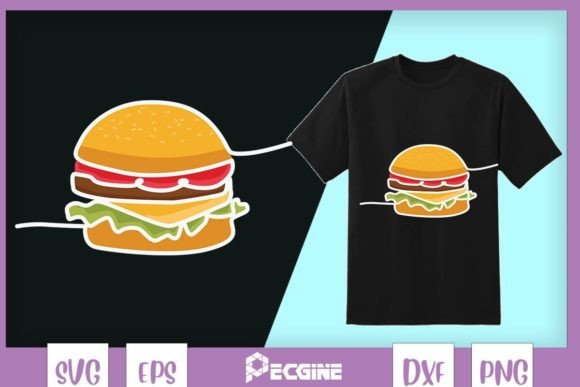
Burger Graphics for T-Shirt Designs
As a brand designer who has spent years refining visual identities for local businesses, I know that the difference between a forgettable flyer and a memorable brand often comes down to the quality of a single graphic. Recently, I was tasked with refreshing the visual identity for "The Crisp Bun," a new artisanal burger joint opening in a bustling downtown district. The owner wanted something that felt approachable yet premium, avoiding the cliché cartoonish fast-food look while still signaling delicious food immediately. This is where I turned to the Burger Graphic Hamburger Art Fast Food asset.
My first impression upon downloading this file was one of immediate utility. Unlike many generic clipart options found on creative marketplaces, this design possesses a clean line work and a balanced composition that suggests a modern, friendly brand personality. It does not scream "greasy spoon"; instead, it feels like a curated food experience. The mood it creates is energetic and appetizing, perfectly suiting a business that wants to project freshness and quality. For small business branding, finding an asset that strikes this balance between playful and professional is rare, making this piece a strong contender for our project.
Evaluating Versatility for Local Branding Projects
The true test of any graphic design asset lies in its versatility across various touchpoints. When reviewing the Burger Graphic Hamburger Art Fast Food, I immediately began visualizing its application beyond just a logo. In the context of packaging design, this illustration serves as an excellent hero graphic. Imagine it printed on the side of a kraft paper burger box or embossed on a custom napkin stack. The clean lines ensure that even when scaled down for smaller applications, such as hang tags or thank-you cards, the image remains legible and impactful.
For a local business, consistency is key to building trust. Using this specific graphic across different mediums helps establish a cohesive brand identity. Whether it is used as a decorative element on a menu, a central feature on social media graphics, or a subtle watermark on a website banner, the visual language remains consistent. This repetition aids in better product recognition. When customers see that familiar burger icon on a promotional ad, a flyer, or a product mockup, their brain instantly connects it to your brand, creating a stronger emotional connection and improving customer trust.
Strategic Applications for Product Labels and Marketing
In my evaluation, the Burger Graphic Hamburger Art Fast Food shines brightest when used to enhance shelf appeal and marketing visuals. For a food business, the product label is prime real estate. Placing this graphic prominently on a sauce bottle label or a takeaway cup can transform a generic item into a branded experience. It adds a layer of polish that elevates the perceived value of the product. Furthermore, for seasonal campaign visuals, this asset can be easily adapted. By adjusting the color palette to match holiday themes or summer vibes, the same core graphic can support year-round marketing efforts without needing a complete redesign.
Beyond physical products, the digital potential is immense. Social media managers and marketers can utilize the high-resolution files to create engaging posts that stop the scroll. The clean aesthetic works well in editorial design layouts for blogs or newsletters, breaking up text and adding visual interest. Even for those venturing into apparel, the file formats included make it suitable for T-Shirt Designs. While this specific review focuses on food branding, the scalability of the vector format means it could easily be adapted for staff uniforms or limited-edition merchandise, further extending the brand's reach.
Technical Review: File Formats and Editability
A critical part of my review process involves inspecting the technical deliverables. The package includes an SVG file, a PNG file, a DXF file, and an EPS file. This variety is essential for a professional workflow. The SVG design and EPS Files are particularly valuable because they are vector-based. This means the graphic can be resized infinitely without losing quality, which is non-negotiable for large-format printing like banners or billboards. As a designer, I appreciate the ability to open these files in Adobe Illustrator or similar software to tweak colors, separate elements, or integrate them seamlessly into complex layouts.
The inclusion of a PNG design with transparency is equally important for quick-turnaround projects. If you are working in Canva or need to drop the image into a web design layout quickly, the PNG allows for instant use without the overhead of vector software. However, for the highest quality print runs, I always recommend utilizing the vector files to ensure crisp edges and vibrant colors. The DXF file opens up possibilities for die-cut packaging or vinyl cutting for signage, adding another dimension to how this asset can be utilized in a physical retail environment.
Practical Designer Notes and Usage Warnings
While the Burger Graphic Hamburger Art Fast Food is a robust asset, it requires careful implementation to maintain a professional look. My advice is to always test the graphic on real packaging mockups before finalizing any print run. Check how it looks in black and white, as some clients may require monochrome versions for receipts or invoices. Additionally, preview the design on small labels; if the details become muddy at a tiny scale, you may need to simplify the layout or increase the size.
Be cautious when using this asset in formal corporate branding or luxury minimalist contexts. The playful nature of a hamburger illustration might clash with a serious, high-end aesthetic unless stylized significantly. Avoid placing it in crowded product packaging areas where ingredient lists or legal information reside; the decoration should never compete with essential text. Similarly, ensure high contrast against your background colors to maintain visual hierarchy. A low-contrast background can render the graphic invisible, defeating its purpose.
Before committing to client work or selling physical products, confirm the commercial licensing terms. Most assets from reputable sources offer a commercial license, but it is vital to verify that the license covers your specific use case, whether it is for a small business branding project, a handmade business, or a larger corporate campaign. Always compare the design with competitor packaging to ensure your brand stands out rather than blending in. Finally, experiment with typography. Pair this graphic with bold sans-serif fonts for a modern look, or try a handwritten font for a more rustic, artisanal feel. The right combination will result in a polished, professional presentation that resonates with your target audience.
In conclusion, the Burger Graphic Hamburger Art Fast Food is a versatile and high-quality tool for any creative entrepreneur looking to elevate their visual presence. From enhancing product labels to creating dynamic social media content, this asset offers the flexibility needed to build a strong, recognizable brand. By applying thoughtful design principles and leveraging the included file formats, local business owners can achieve a level of professionalism that fosters trust and drives sales.